
Data-Driven Sunlight Planning for Agriculture
Map sun exposure across your land, see which crops will thrive where, and model greenhouse light levels — all from real 3D terrain and climate data.
Without SunTrace3D
Guessing about sunlight on fields
Crop yields depend on precise sunlight hours, but most farmers rely on intuition rather than data for field allocation.
Terrain affects light unpredictably
Hillside slopes, nearby buildings, and tree lines create complex shade patterns that change with seasons.
Greenhouse placement is trial and error
Positioning greenhouses for optimal light requires understanding surrounding shadows and seasonal sun angles.
With SunTrace3D
Sunlight heatmap for every field
Color-coded overlay shows exact sun hours across your entire property, accounting for terrain, buildings, and tree lines.
Crop suitability zones
See which crops match each area's sunlight conditions. The plant database includes sun requirements and climate compatibility.
Greenhouse light modeling
Configure greenhouses with adjustable glass transmission. See realistic light levels inside, accounting for glass filtering and surrounding shade.
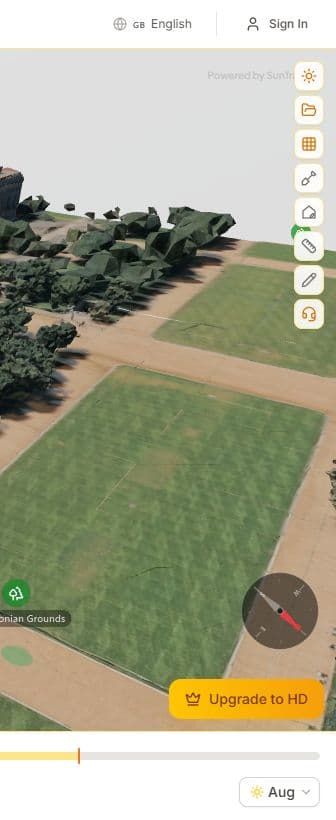
Crop Suitability Mapping
Overlay crop suitability zones based on actual sunlight hours, growing season, and local climate data. See which crops will thrive in each area of your farm.
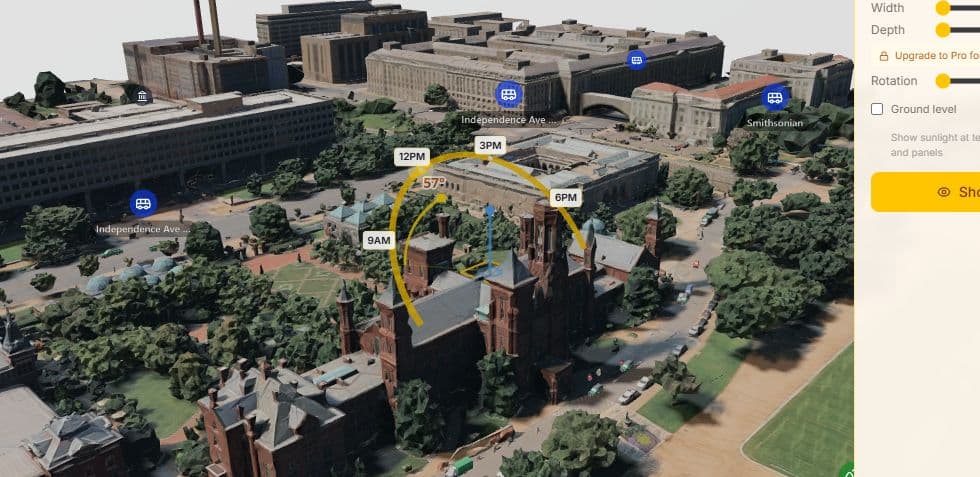
Sunlight Heatmap
Overlay a color-coded heatmap showing annual sun exposure across your entire site. Instantly identify the sunniest and shadiest zones.
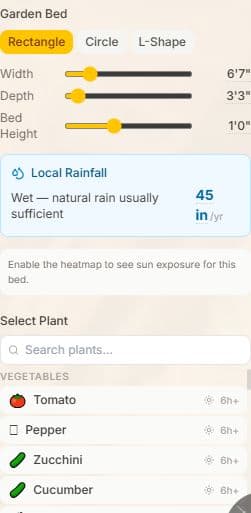
Garden Bed Planner
Design garden beds and choose from a database of plants suited to your sunlight conditions. Plan where to place sun-loving or shade-tolerant species.
Slope & Aspect Analysis
Analyze terrain slope and aspect to understand water drainage patterns and how hillside orientation affects sunlight exposure for different crop types.
Greenhouse Light Modeling
Configure greenhouses with adjustable glass transmission rates. The sunlight heatmap shows realistic light levels inside, accounting for glass filtering and surrounding shade.
Global Coverage
Analyze any address on Earth. Photorealistic 3D models available for cities worldwide, with satellite irradiance data covering every location on the planet.
How It Works
From address to sunlight analysis in under a minute
Load Your Farm in 3D
Enter the address and see your land with all surrounding terrain, buildings, and tree lines in photorealistic 3D.
Map Sunlight Zones
Enable the sunlight heatmap to see hour-by-hour and seasonal sun exposure across every part of your property.
Plan Crops & Greenhouses
Use the crop selector and greenhouse tools to plan your layout based on real sunlight data for maximum yield.
Frequently Asked Questions
Does it account for terrain slope and aspect?
Yes. The 3D models include real terrain geometry. South-facing slopes get more sun, north-facing slopes get less — all of this is reflected in the heatmap and crop suitability analysis.
Can I see sunlight for specific growing seasons?
Yes. Use the monthly heatmap view to see sun exposure for any month of the year. Track how light patterns shift from planting season through harvest.
What crops are in the database?
The plant database includes 50+ species across vegetables, herbs, fruits, flowers, and shrubs — each with sun hour requirements, hardiness zones, and growing season data.
How does the greenhouse modeling work?
Place a greenhouse in the scene, set glass transmission (30–95%), and the sunlight heatmap shows realistic interior light levels accounting for glass filtering and exterior shade from surrounding structures.
Does it work for large agricultural areas?
Yes. The 3D models cover areas up to several hundred meters. Pro users get extended heatmap coverage (100m radius) for larger farm areas.
Ready to map sunlight across your land?
Start free — no credit card needed